- (210) 555-7398
- [email protected]
- 2022 Gray Fox Creek, San Antonio, TX 78245, USA

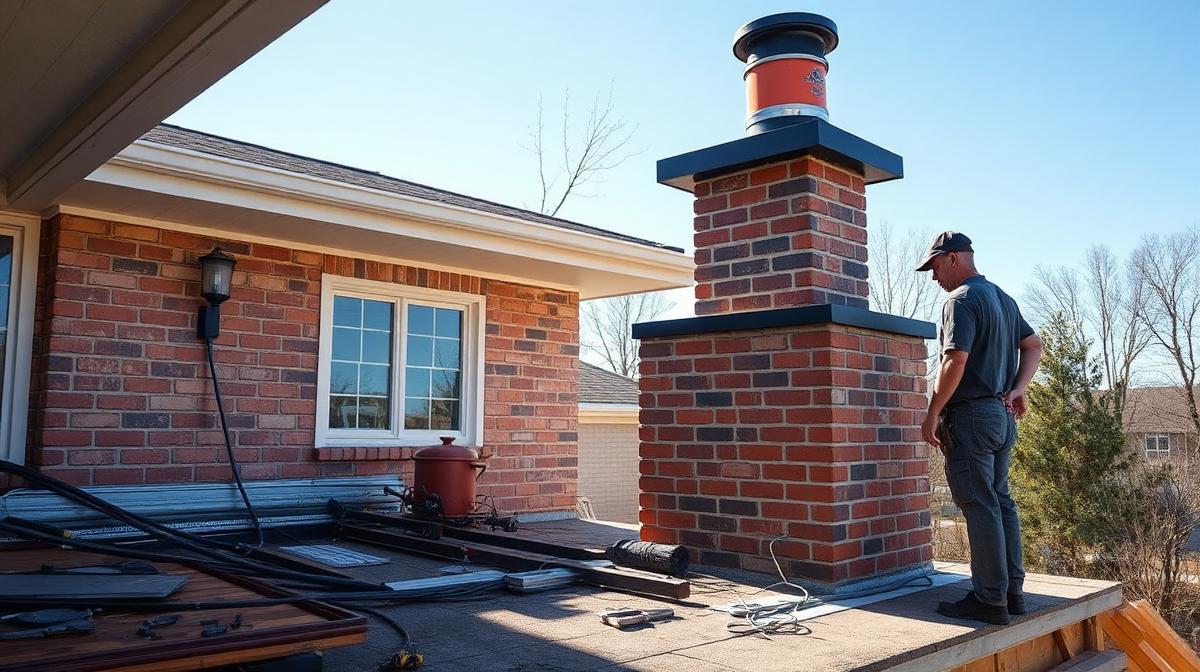
You asked for an estimate on a spalling crown, a cracked flue tile, or a leak that shows up on the ceiling every time it rains. What came back was a figure that made you sit down. Before you sign, stall, or start calling around in a panic, it helps to understand what actually drives a large chimney quote and where the line sits between a legitimate scope of work and a sales pitch dressed up as a repair.
In public discussions around historic home chimney restoration work, homeowners often describe getting two wildly different numbers for what sounds like the same problem. That gap is real, and it usually comes down to scope, access, and how much of the chimney the contractor is actually planning to touch.
A large number is not automatically a scam, and a small number is not automatically a bargain. The quote should itemize what is being repaired, why, and how the work will be accessed. If it does not, that is your first warning sign.
Common line items behind a high quote include crown reconstruction, flue liner replacement, mortar joint repointing (tuckpointing), flashing replacement where the chimney meets the roof, and masonry rebuild above the roofline. Each of those is a distinct trade task with its own labor and material cost. A quote that lumps them into one flat figure without explanation is hard to evaluate.
Access is a major cost driver. A chimney on a steep roof, behind a fence, or boxed in by landscaping takes more setup, more safety equipment, and more time. Scaffolding versus ladder work changes the number. So does whether the crew is removing and rebuilding masonry or resurfacing it.
Material choice matters too. Matching brick and mortar on an older home is not the same as using standard off-the-shelf block. If your house has a fieldstone chimney, the repair approach is different again, and homeowners with fieldstone chimneys often report emergency leaks that get tarped as a temporary fix until proper repair can be scheduled.
Legit quotes are specific, verifiable, and tied to a real local company you can check. Scam quotes are vague, urgent, and often come from operations that are not based in your area at all.
Consumers have warned about fake chimney service companies that lean on fake reviews and call centers to book work they may not actually perform well. A few practical checks:
If a quote cannot survive those four questions, the size of the number is not your real problem.
A chimney scammer is a contractor who creates urgency, often through a cold inspection, to sell work that is either unnecessary, poorly done, or priced far above the real scope.
The pattern usually involves a knock at the door, a “free” inspection, and an immediate finding that the chimney is dangerous. The quote is high, the pressure is immediate, and the paperwork is thin. The tell is not the price alone. It is the combination of urgency, vagueness, and an inability to show you a real local track record.
Homeowners in San Antonio have asked in public forums for first-hand experiences and recommendations for chimney sweeps specifically because the market has enough noise that trust is hard to establish cold. That instinct is correct. Ask for references, ask how long the company has operated locally, and ask what certifications the technicians hold.
The 3 to 10 rule is a general guideline that a chimney should extend at least 3 feet above the roof surface and at least 2 feet above anything within 10 feet of it.
It exists to protect draft and to reduce the chance of sparks or smoke affecting nearby roof surfaces. If a repair quote includes rebuilding the top of the chimney, the height and clearance should be part of the conversation. A rebuild that ignores this rule can leave you with a chimney that still drafts poorly or still poses a spark risk.
This matters most on older homes. Owners of historic homes in San Antonio worry about aging brick chimneys and the risk of fire from sparks, and that concern is well placed when the mortar has softened and the crown has cracked. A proper rebuild addresses height, clearance, and masonry condition together, not one at a time.
Local conditions shape the scope. The region’s clay soils move with moisture, and that movement stresses masonry over time. Foundation and structural movement can show up as cracked mortar joints, a leaning stack, or a crown that has pulled away from the flue. When that is the underlying cause, a repair that only patches the visible crack will not hold.
Heat and sun exposure also age the crown and cap. A crown that has cracked lets water in, and water is what turns a small masonry issue into a structural one. If you are seeing stains on the ceiling or around the firebox after a heavy rain, that is a flashing or crown problem until proven otherwise.
Flue liner damage is another common finding. A compromised liner is a safety issue, not a cosmetic one, and liner work is one of the larger line items you will see on a quote.
Decide based on safety and water intrusion, not on the size of the number alone. If the chimney is actively leaking, if the liner is compromised, or if masonry is falling, waiting makes the eventual repair larger.
If the issue is a hairline crack in the crown and no water is getting in, you have more time to gather a second opinion. Homeowners often report that a second quote changed their decision entirely, sometimes lower, sometimes higher, but always clearer once the scope was itemized.
When you do compare quotes, compare scope line by line, not totals. This breakdown of how to compare chimney repair estimates is a useful reference for reading two quotes side by side.
A real repair starts with a proper inspection: crown, cap, flue liner, mortar joints, flashing, and the masonry above the roofline. The technician should be able to show you what they found, not just tell you.
From there, the work is sequenced. Water intrusion gets stopped first (crown, cap, flashing). Then structural masonry (repointing, rebuild, or partial reconstruction). Then the flue liner if it is compromised. Skipping the sequence is how repairs fail early.
If your home has a historic or mission-era chimney, the material matching and the masonry approach are different from a modern build, and it is worth asking specifically how the crew handles that. You can see how we handle historic chimney restoration here if that is your situation.
Stop DIY the moment the work involves the flue liner, the crown structure, or anything above the roofline. Those are safety and structural items, and a DIY fix that does not meet inspection standards can cost more to undo than it saved.
Homeowners in San Antonio often start with a DIY repair and then discover it does not hold up under inspection, which is exactly when a professional scope becomes necessary. If your fix involved sealant over a cracked crown or a patch over a leaking flashing, that is a temporary measure, not a repair.
If you are unsure whether your situation is a quick fix or a real repair, the honest answer is to have it looked at. if you want a sense of the inspection standard we hold to.
Sometimes, but usually only when the damage came from a covered event like a storm, and rarely for wear, age, or lack of maintenance.
If a storm knocked flashing loose and water came in, that is a different claim than a crown that has been cracking for years. Document the damage with photos before any repair starts, and read your policy language on maintenance versus sudden damage. A contractor who understands this can help you describe the cause accurately without overstating it.
Cost depends on scope, access, and materials, so any single average is misleading. A crown repair and a full liner replacement are not comparable jobs.
What you can do is insist that every quote you receive itemizes the same categories: crown, cap, liner, flashing, mortar, and masonry above the roofline. When two quotes use the same categories, the comparison becomes meaningful. When one quote is a single number and the other is a breakdown, the breakdown is the one you can trust to evaluate.
You do not need five quotes. Two, compared line by line, is usually enough to see whether the first number was fair. Ask each contractor what they would do first, what they would defer, and what could change the price once work begins.
If you are ready to have a real local crew look at your chimney and give you a clear, itemized scope, call us. We have been serving San Antonio homeowners for 25 years, with 1,850 client projects completed and 1,573 clients helped. If your situation involves something more specialized, you can also visit our page on hospital boiler stack inspection and cleaning to see the range of work we handle. The page that covers this work in detail is learn more.